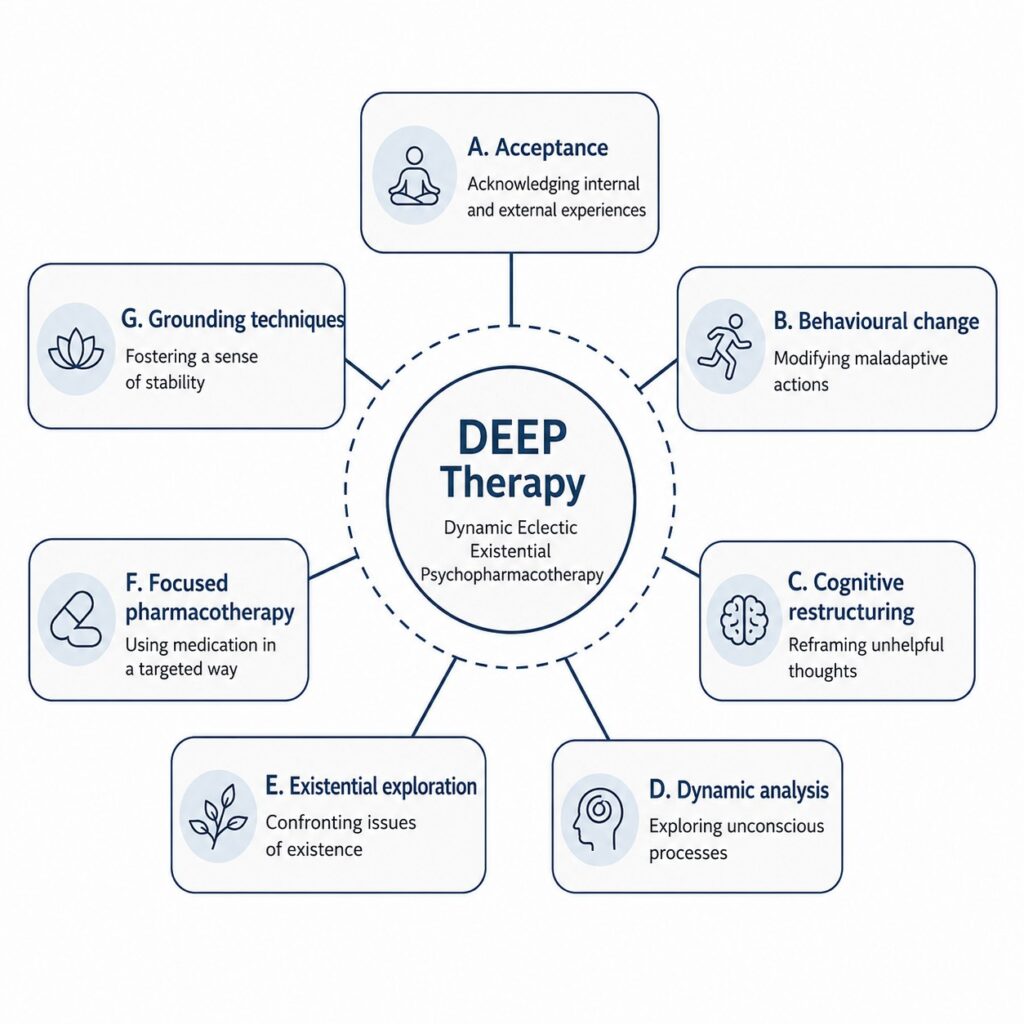
Human rights-based approaches and existential philosophy share important common ground. Both centre the human person rather than the disorder, and both emphasise dignity, agency, responsibility, and relationality. Integrating these traditions into Rights-based Existential Psychiatry creates a comprehensive and ethically grounded framework for understanding and treating mental health conditions.
Rights-based Existential Psychiatry does not reject existing psychiatric knowledge or established schools of thought. Rather, it proposes a reorientation, one that restores depth, dignity, and agency to mental health care while maintaining scientific integrity and evidence-informed practice. At its core, it combines the ethical imperatives of human rights-based care (autonomy, non-coercion, participation, and equity) with the existential understanding of psychological suffering as a confrontation with the fundamental conditions of human existence. The result is a model that is clinically responsible, philosophically coherent, and morally grounded.
Human rights-based Psychiatry:
Human rights-based psychiatry is an approach to mental health care grounded in the principles of international human rights law. It recognises that individuals with mental health conditions possess the same inherent rights as all human beings, and that these rights must be respected, protected, and fulfilled throughout every aspect of care.
This approach emphasises dignity, autonomy, non-discrimination, and meaningful participation. Individuals have the right to make informed decisions about their treatment, to be free from unnecessary coercion or forced interventions, and to be actively involved in care planning. It also affirms rights to privacy, confidentiality, and access to clear and comprehensible information.
Human rights-based psychiatry further promotes treatment in the least restrictive environment possible, favouring community-based and recovery-oriented supports over institutionalisation whenever feasible. Collaboration among clinicians, patients, families, and communities is central. The goal is not only symptom reduction, but empowerment, respect for lived experience, and restoration of social inclusion.
Ultimately, human rights-based psychiatry seeks to create a mental health system that upholds dignity, strengthens agency, and fosters recovery within a framework of justice and accountability.
Existential Psychiatry:
Existential psychiatry draws on existential philosophy to deepen our understanding of psychological suffering. Existential philosophy explores questions of meaning, freedom, responsibility, mortality, authenticity, and the nature of human existence. Existential psychiatry applies these principles to clinical practice, emphasising subjective experience and the individual’s search for meaning within the realities of life.
- Death: Death is not viewed merely as a biological event, but as an existential reality that shapes human consciousness. Awareness of mortality can provoke anxiety, yet it can also stimulate reflection on meaning, purpose, and authenticity. Existential psychotherapy invites individuals to confront finitude rather than avoid it, fostering a deeper appreciation of time and a more intentional engagement with life.
- Freedom, Choice and Responsibility: Human beings are not infinitely powerful, but they are continually required to choose. Existential psychiatry explores how individuals exercise agency within constraints and how they assume responsibility for their responses to circumstances, including suffering. Therapy supports patients in moving from passivity or victimhood toward authorship of their lives.
- Meaning and Purpose: Mental distress is often intertwined with crises of meaning. Existential psychiatry recognises that suffering may reflect disconnection from values, purpose, or identity. Therapy, therefore, helps individuals discover, clarify, or create meaning, even amid adversity.
- Isolation and Connection: Existential thought acknowledges the tension between our fundamental separateness and our deep need for connection. Loneliness, alienation, and relational rupture are understood not only as social phenomena but as existential realities. Therapy addresses both the pain of isolation and the courage required for genuine connection.
- Authenticity: Authenticity involves living in alignment with one’s values and inner truth rather than conforming to external pressures or internalised expectations. Existential psychiatry supports individuals in recognising inauthentic patterns and cultivating lives that are congruent with their deeper commitments.
- Existential Angst: Existential anxiety arises from awareness of uncertainty, mortality, freedom, and responsibility. Rather than pathologising this anxiety, existential psychiatry explores how individuals respond to it, whether through avoidance, rigidity, despair, or growth.
Overall, existential psychiatry is a framework for understanding and approaching mental health issues, incorporating existential principles, to help individuals explore and navigate their existential concerns and to encourage a holistic understanding of individuals and their mental health struggles within the broader context of their existential experience.
Rights-based Existential Psychiatry: From Parallel to Integration
Rights-based and existential psychiatry converge in a shared conviction: that mental health care must treat persons, not merely symptoms. Human rights-based psychiatry provides the ethical structure, a commitment to dignity, autonomy, non-coercion, and participatory care. Existential psychiatry provides the philosophical depth, an understanding of suffering as rooted not only in biology or circumstance, but in the challenges of being human. Rights-based Existential Psychiatry unites these dimensions. Where human rights guard against objectification, existential thought guards against reductionism. Where rights emphasise external protections, existential philosophy illuminates internal responsibility. Where rights insist on participation, existentialism insists on authorship. Together, they create a model in which the patient is neither a passive recipient of treatment nor solely a bearer of pathology, but a meaning-seeking, choice-making, relational human being whose rights and existential struggles are equally respected. Rights-based Existential Psychiatry, therefore, seeks to humanise psychiatric care at both structural and clinical levels. It affirms scientific knowledge while resisting dehumanisation. It protects autonomy while inviting responsibility. It validates suffering while encouraging growth. In Rights-based Existential Psychiatry, dignity is not an abstract principle, and meaning is not a luxury; both are central to healing.